


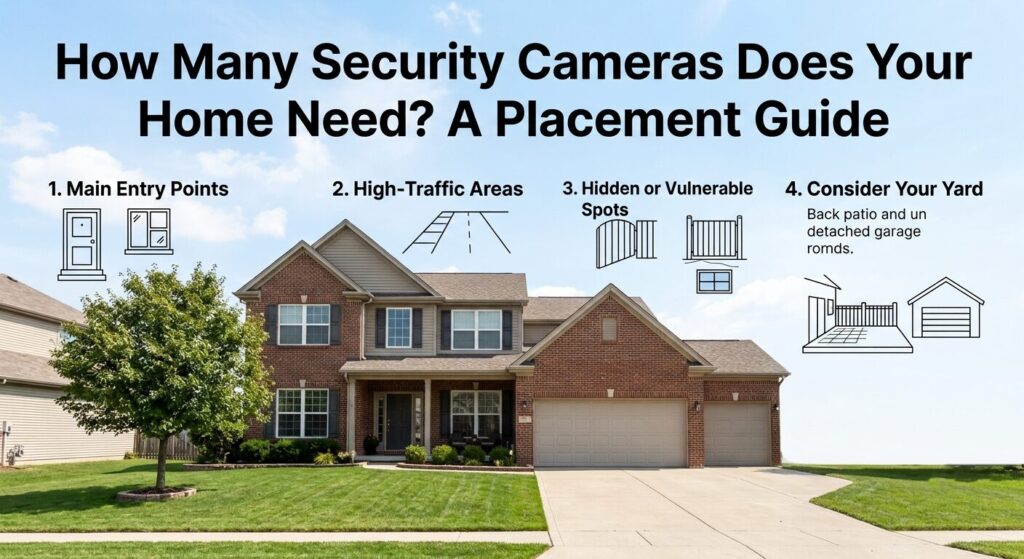
A security camera system is one of the most important components of a modern home security solution. However, many homeowners are unsure how many cameras they actually need, where cameras should be installed, and whether their current setup leaves vulnerable areas unprotected.
Installing too few cameras can leave important areas of your property uncovered, while installing cameras without a proper plan can result in missed activity, poor visibility, or unnecessary costs.
The best security camera system is not about having the most cameras—it is about placing the right cameras in the right locations to create complete coverage.
Whether you live in Calgary, Edmonton, Regina, Saskatoon, Winnipeg, London, Ontario, or anywhere across Canada, understanding camera placement and common security gaps can help you build a smarter and more effective home protection system.
How Many Security Cameras Does Your Home Really Need?
The number of security cameras your home needs depends on several factors, including the size of your property, the number of entry points, your layout, and the level of protection you want.
For many homes, a complete security camera setup includes coverage for:
- Front door and main entrance
- Driveway and garage area
- Backyard and outdoor spaces
- Side entrances
- High-traffic indoor areas
- Basement or other vulnerable areas
A smaller home may only require two to three strategically placed cameras, while larger homes may benefit from six or more cameras to provide complete coverage.
Instead of asking, “How many cameras should I buy?” a better question is:
“Which areas of my home would I want to see if something happened?”
This approach helps homeowners focus on protecting important areas rather than simply adding more devices.
A Basic Security Camera Setup
For many homeowners, a good starting point is:
- Front Door Camera
The front entrance is one of the most important locations for a security camera.
A large percentage of visitors, deliveries, and potential security concerns happen at the front door. A video doorbell camera allows homeowners to see who is arriving, monitor deliveries, and receive alerts when activity occurs.
A quality video doorbell can provide:
- Visitor identification
- Package monitoring
- Two-way communication
- Video evidence when needed
- Driveway and Garage Camera
The garage is often one of the most vulnerable areas of a home. Many homeowners focus on securing the main entrance but overlook garages, side doors, and storage areas.
A camera covering the driveway and garage can help monitor:
- Vehicles
- Garage doors
- Outdoor equipment
- Activity around the property
- Backyard Camera
Backyards often contain valuable items such as tools, recreational equipment, and outdoor furniture. They can also provide access points that are hidden from street visibility.
An outdoor camera can help monitor:
- Fences and gates
- Patio areas
- Rear entrances
- Detached garages or sheds
Where Should You Install Security Cameras Around Your Home?
Camera placement is just as important as the number of cameras you install. Even a high-quality camera will not provide effective protection if it is positioned incorrectly.
Front Entrance
The front door should almost always be a priority location.
Install cameras where they can capture:
- Faces of visitors
- Deliveries
- Walkway activity
- Doorstep activity
Avoid placing cameras too high, as this can make facial identification more difficult.
Driveway
A driveway camera provides visibility of vehicles entering and leaving your property.
For best results, position the camera to capture:
- Vehicle license plates when possible
- The entire driveway area
- People approaching the home
Garage
Garages are frequently overlooked but should be considered a key security area.
A garage camera can help protect:
- Vehicles
- Tools
- Storage areas
- Garage entrances
Smart garage security combined with cameras and sensors creates an additional layer of protection.
Side Doors and Gates
Side entrances are common security blind spots because they are often hidden from neighbours and street views.
Consider installing cameras near:
- Side doors
- Gates
- Pathways
- Narrow access points
Backyard
A backyard camera helps protect areas that are not visible from the front of the home.
Recommended locations include:
- Rear entrances
- Decks
- Patios
- Outdoor storage areas
Indoor Areas
Indoor cameras can provide additional visibility when homeowners are away.
Common indoor camera locations include:
- Main living areas
- Entryways
- Areas containing valuables
- Rooms used by children or pets
Indoor cameras should be positioned thoughtfully to balance security and privacy.
The Most Common Home Security Blind Spots
Many homeowners install cameras but still leave important areas uncovered. Understanding common blind spots can help create a stronger security strategy.
- Side Entrances
Side doors are often less visible than front entrances, making them a common target for unauthorized access.
Solution: Install a camera or door/window sensor to monitor side entrances and receive alerts when activity occurs.
- Garage Areas
Many homeowners secure their front door but forget that garages often provide direct access into the home.
Solution: Use a combination of:
- Outdoor camera coverage
- Garage sensors
- Smart garage controls
- Door contacts
- Basement Windows
Basement windows are frequently hidden from view and can be overlooked during security planning.
Solution: Add window sensors and consider camera coverage for exterior basement areas.
- Driveway Corners
A single front camera may not capture activity around the entire driveway or property.
Solution: Use multiple camera angles to eliminate areas where someone could approach unnoticed.
- Backyard Access Points
Fences, gates, and rear doors can create hidden entry points.
Solution: Install outdoor cameras that provide coverage of these areas and allow remote viewing.
- Areas Behind Large Structures
Sheds, fences, landscaping, and large vehicles can block camera views.
Solution: Review camera angles carefully and adjust placement to avoid obstructions.
Choosing the Right Security Cameras for Your Home
Not every camera serves the same purpose. The right combination depends on your security goals.
Outdoor Security Cameras
Outdoor cameras are designed to monitor exterior areas such as:
- Driveways
- Yards
- Garages
- Entry points
Look for features such as:
- High-definition video
- Night vision
- Weather resistance
- Wide viewing angles
- Reliable recording
Indoor Security Cameras
Indoor cameras are useful for monitoring activity inside your home.
They can help homeowners:
- Check on pets
- Monitor important rooms
- Verify alerts
- Stay connected while away
Video Doorbell Cameras
Video doorbells combine convenience and security by protecting one of the most active areas of your home—the front door.
They provide visibility for:
- Visitors
- Deliveries
- Unexpected activity
Why Professional Monitoring Adds More Protection
Security cameras are an important part of home protection, but cameras alone may not prevent an emergency.
A complete security solution combines:
- Cameras
- Door and window sensors
- Motion detectors
- Smart locks
- Fire and carbon monoxide protection
- Professional monitoring
With professional monitoring, trained specialists can respond when an alarm event occurs and help coordinate the appropriate response.
Create a Security Camera Plan Before Installing
Before installing cameras, walk around your property and identify:
- All entrances
- Hidden areas
- Valuable assets
- High-traffic zones
- Areas without visibility from neighbours
A simple security assessment can reveal gaps that may otherwise be missed.
The goal is not to cover every square inch of your property—it is to create a strategic security system that provides awareness, evidence, and peace of mind.
Protect Your Home With a Complete Security Camera Solution
The right number of cameras depends on your home, your lifestyle, and your security needs. A properly designed system focuses on protecting important entry points, eliminating blind spots, and providing reliable visibility when you need it most.
Whether you need a video doorbell for package protection, outdoor cameras for your property, or a complete professionally monitored security system, AlarmTek can help design a solution that fits your home.
A smarter security system starts with understanding your property, identifying vulnerabilities, and choosing the right technology to protect what matters most. GET FREE QUOTE